


ALTERNATE NAMES – Baker’s cinnamon, Ceylon cinnamon
BOTANICAL NAMES OF CULINARY SPECIES – Cinnamomum zeylanicum, Cinnamomum verum
PLANT FAMILY – Laurel (Lauraceae)
COUNTRY OF BOTANICAL ORIGIN – Sri Lanka
MAJOR COUNTRIES OF CULTIVATION – Sri Lanka, Maldives
SEASONS OF HARVEST – Spring
PARTS USED – Inner bark
COLOR – Pale tan
Cinnamomum zeylanicum, almost exclusively from Sri Lanka, is a species cultivated for the spice trade, and it has perhaps the most complex flavour of all the cinnamons grown worldwide. It is made from the inner bark of trees scientifically known as Cinnamomum. All of the subvarieties come from the laurel family, and it is the bark of the tree that is most commonly harvested to give flavour to uncountable recipes in kitchens around the globe. The inner bark is then extracted and the woody parts removed. During the rainy season on the island, the mornings reveal gardens shrouded in fog, filled with harvest workers carefully selecting tender young branches of just the right size that will become the long sticks of cinnamon prized for their aroma and taste.
Typically, no more than two inches in diameter, the branches are moist at harvest from the rains during the recent monsoon season, and thick with tender new growth, which helps the peeling process. The freshly cut branches are rubbed with rods to loosen the bark, then cut with special knives designed for the process. The outermost bark is removed, yielding sheets of inner bark that will be dried gently in huts to a thin, brittle consistency. Intact pieces of this dried bark are made into cigar-shaped rolls of several sheets for each stick. When it dries, it forms strips that curl into rolls, called cinnamon sticks. These sticks can be ground to form cinnamon powder. The oils are very complex in taste and aroma and seem to deteriorate more rapidly than those of most other spices, so the extra step of grinding is well worth the effort here.
On the Indian subcontinent, it’s true cinnamon that perfumes the curries of the south, flavours the rice and dal dishes of the north, and even finds its way into the tea called chai when served spiced and milked. Blended into spice classics like garam masala—the name meaning simply “sweet mix”—it provides a sweet flavour and mild heat.
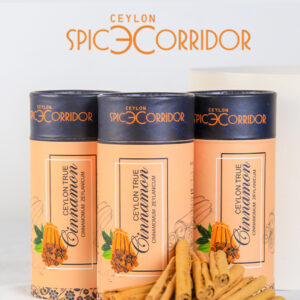
The distinct smell and flavour of cinnamon are due to the oily part, which is very high in the compound cinnamaldehyde. If you chew a small cinnamon piece, it should quickly take on a complex nature as a few seconds in your mouth rehydrate the essential oils. Essences of orange and cedar should come to the surface, followed by a distinctive heat reminiscent of clove or mild pepper. This bloom of complexity is the best indicator of quality, regardless of shape or form, and tells the buyer that he has found a fresh crop that’s been properly harvested. It is so powerful that cinnamon can be used as a natural food preservative It Is Better to Use Ceylon (“True” Cinnamon) because is much better in this regard, and studies show that it’s much lower in coumarin. Unfortunately, most cinnamon found in supermarkets is the cheaper Cassia variety. But you buy original “True Cinnamon” which are harvested in Sri Lanka from Ceylon Spice Corridor.
Reviews
There are no reviews yet.