

BOTANICAL NAME OF CULINARY SPECIES – Piper nigrum
PLANT FAMILY – Pepper (Piperaceae)
COUNTRY OF BOTANICAL ORIGIN – India
MAJOR COUNTRIES OF CULTIVATION – Sri Lanka, India, Indonesia, South America
SEASON OF HARVEST – Spring through fall
PARTS USED – Fruits
COLORS – Vary by production
It is hard to imagine a spice rack without black pepper. The Zelig of the culinary world, the spice insinuates itself into an endless medley of food, creating hot or earthy sensations, depending on where the pepper is grown. Black pepper is produced from the still-green, unripe drupe of the pepper plant The drupes are cooked briefly in hot water, both to clean them and to prepare them for drying. The heat ruptures cell walls in the pepper, speeding the work of browning enzymes during drying. The drupes dry in the sun or by machine for several days, during which the pepper skin around the seed shrinks and darkens into a thin, wrinkled black layer. Once dry, the spice is called black pepper. The pepper plant is a perennial woody vine growing up to 4 m (13 ft) in height on supporting trees, poles, or trellises. It is a spreading vine, rooting readily where trailing stems touch the ground. The leaves are alternate, entire, 5 to 10 cm (2.0 to 3.9 in) long and 3 to 6 cm (1.2 to 2.4 in) across.
Although it is a nearly universal spice, many people in the West don’t know where pepper comes from and mistakenly believe that it grows on trees. However, if you were raised in Kerala, on the southwest coast of India, you would have no problem identifying a pepper plant. It would be as familiar as dandelions crowding a suburban lawn on a summer day in the eastern United States. Black pepper, a vine, thrives naturally only in tropical soils, and its stubborn inability to grow elsewhere is one of the reasons it has had such an impact on world history. We all recognize black peppercorns, which are actually the dried berry of the Piper nigrum plant. It’s the drying process that gives them their distinctive colours of deep brown to jet black. The almost-ripened, greenish-yellow berries are harvested from the plant in long strands of twenty to forty berries each. They are then left to oxidize in the heat of the sun, where they take on their dark colour and slightly dimpled shape.
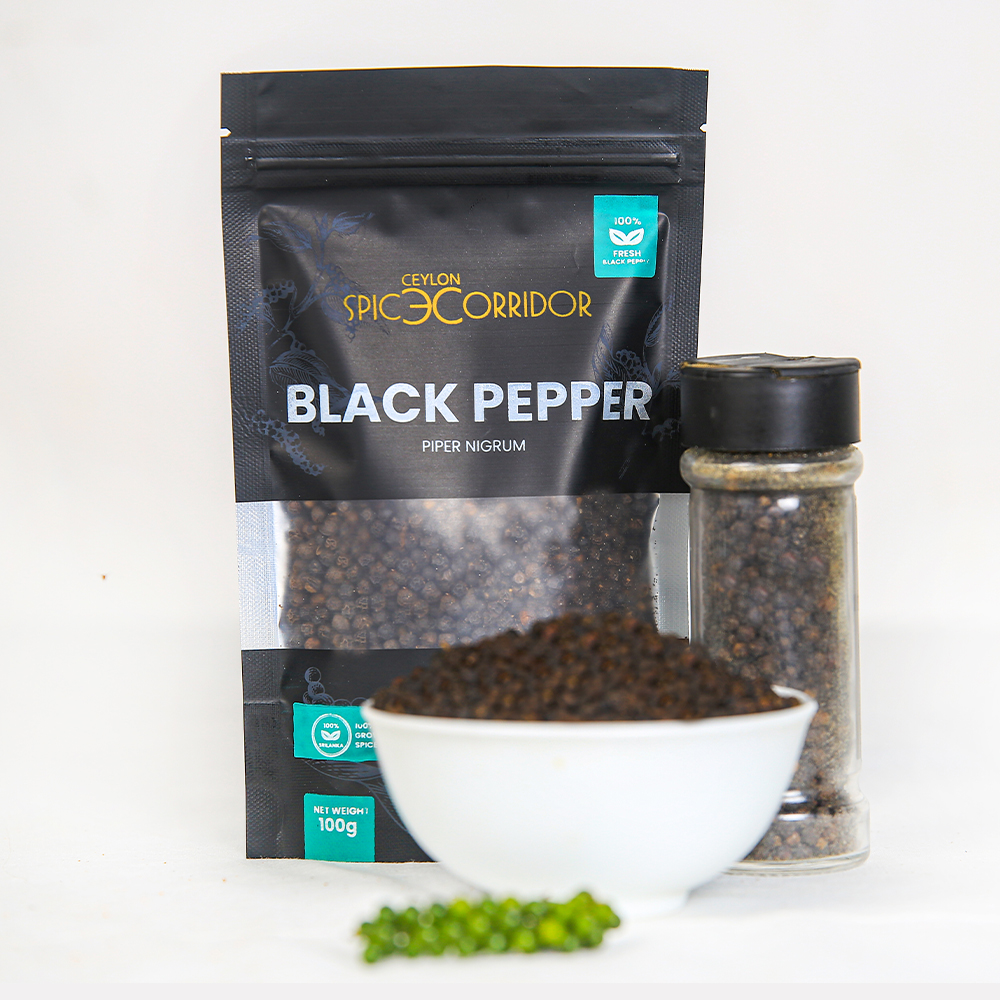
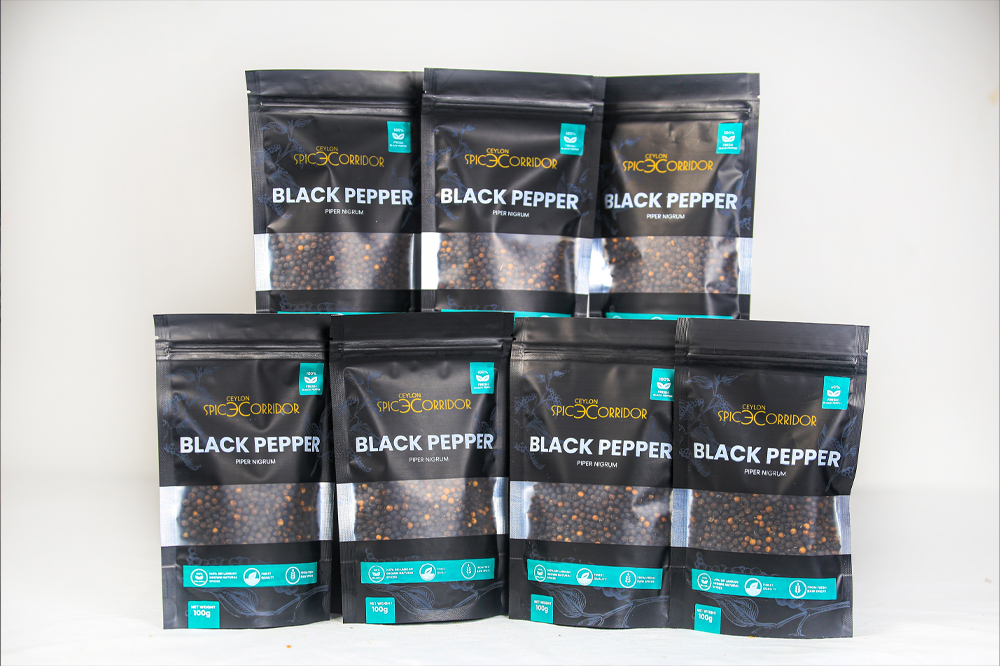
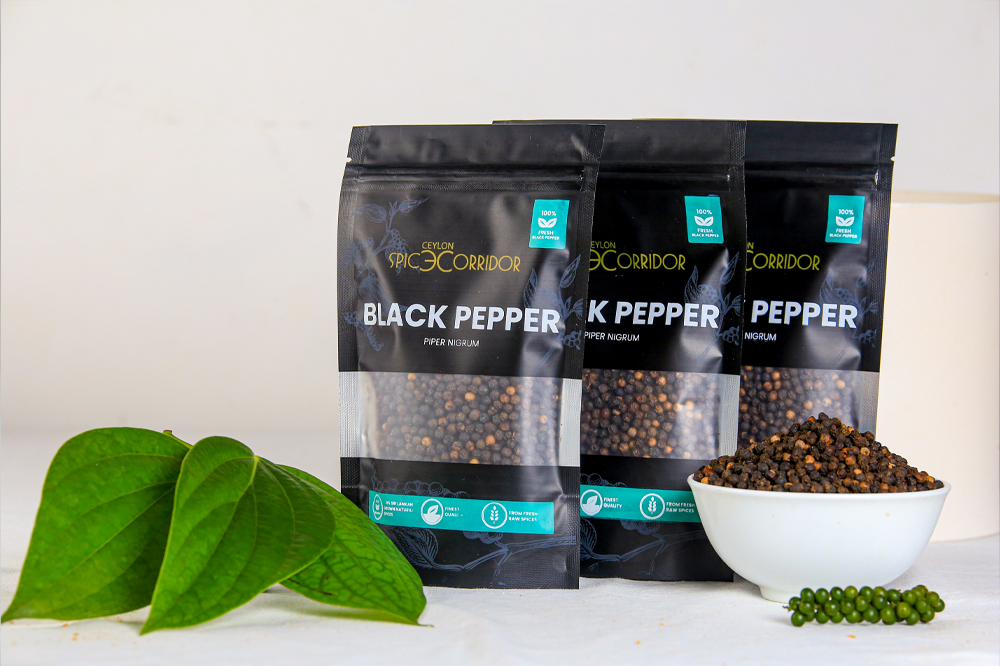
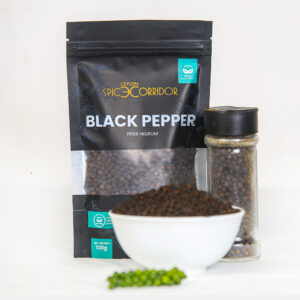
Pepper is the single most important crop in the spice trade today, as is obvious by its truly global use. Beyond salt and water, it is perhaps the world’s most common ingredient, and the swings of the pepper trade reflect its importance in the kitchen. Any cook who can elevate the quality of just this one spice in his rack will do a great service to his cuisine. You can buy original “Black Pepper” which are harvested in Sri Lanka from Ceylon Spice Corridor.


Reviews
There are no reviews yet.